A rebellious autumn dish that will feed the many.
Warning: making this crumble is an act of rebellion against the state and could result in persecution. Proceed with precaution…
Ingredients
- Guerrilla gardened Welsh black oats
- Scrumped apples
- Foraged cobnut crumbs
Cook time: 30 minutes
Prep time: >100 hours (spread unevenly across 10 months)
Methodology
Where this crumble begins and where it ends is somewhat hard to tell. It is a story with many characters, diverse landscapes, and endless possibilities. It features Italian revolutionaries, a mass extinction and gardening bandits. All good stories begin with potential, so let us start with the seed.
Out of extinction oats
Back in February 2023, I was fortunate to see Gerald Miles speak at the Bristol Seed Swap, an event hosted each year at the Trinity centre, to provide a space for gardeners old and new to exchange seeds. Upon arriving in the hall, I realised it wasn’t my first meeting Gerald, for the previous autumn I had joined the Good Food Good Farming march in London, where he had driven all the way from Pembrokeshire in his tractor, in order to lead the crowd from parliament square. It was a pleasant day and inspiring to protest in the name of sustainable agriculture. In Bristol, Gerald gave a moving talk about seed sovereignty and the threat of industrial agriculture to not only farmers, but also public health and the environment. Seed sovereignty is a movement that stands up for the rights of farmers and communities to grow food that is culturally appropriate, ecologically sound and allows farmers to operate outside of the oppression of industrial agriculture.

Less than a century ago, the farming landscape of Wales and the rest of the UK would have looked vastly different. Rather than the monoculture, highly specialised farms of current times which lack diversity, back then, farms would have been much smaller, more varied, employed more people and grown crops and kept animals that were adapted to the locality. It is in this more traditional picture of farming that the Welsh black oat would have been found, and was fixed in the memory of Gerald when he began his quest to re-establish the cultivation of this ancient grain. Gerald and fellow black oats grower Iwan Evans, both in their seventies, remember the prevalence of this grain during their childhood, however since then, the agricultural landscape has changed dramatically, including an estimated 75% loss of global crop diversity.

Thankfully, a strong counter movement to save local foods is resisting such atrocities. Individuals like Gerald and the passionate group of growers and activists he has worked alongside provide hope for the future. At the end of Gerlad’s talk at the Seed Swap, he handed out packets of the oats grown by him. I took several pouches of the oats, unknown where they would end up, but with a burning desire to join the resistance.
Guerilla gardening
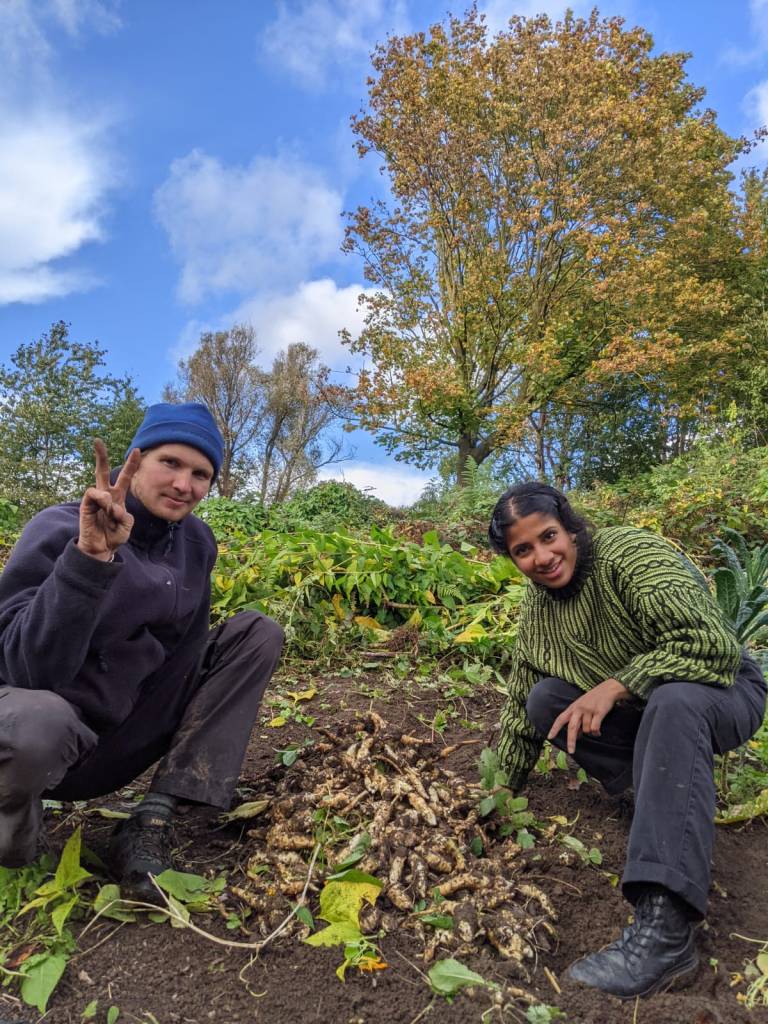
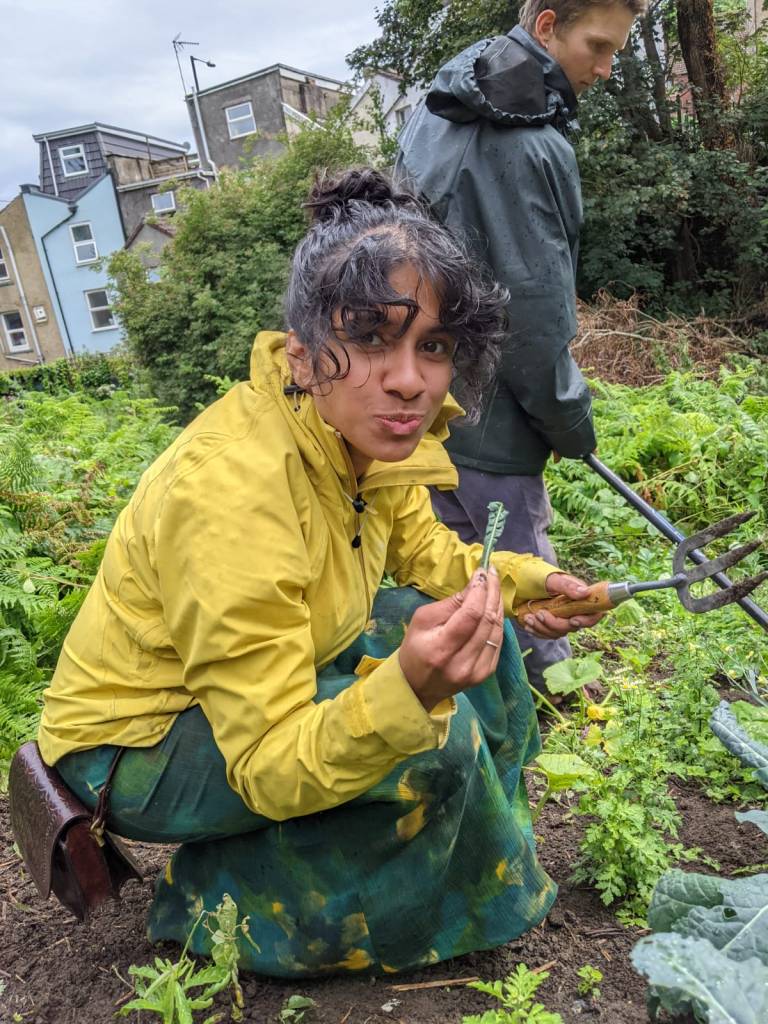
A train on the nearby railway rumbles, cyclists wizz pasts unbeknown, a pigeon watches on with curiosity from a nearby tree. Here on a modest patch of soil, no larger than a few metres squared, a group of friends congregate to dig up their illegal treasure. It’s not the type that would get a pirate excited, but it certainly had us beaming. On this autumn afternoon, it was time for us to dig up our Jerusalem artichokes, one of the defining features of the plot, which over the last few months had grown to staggering heights, showcasing their eye-catching sunshine-yellow flowers.
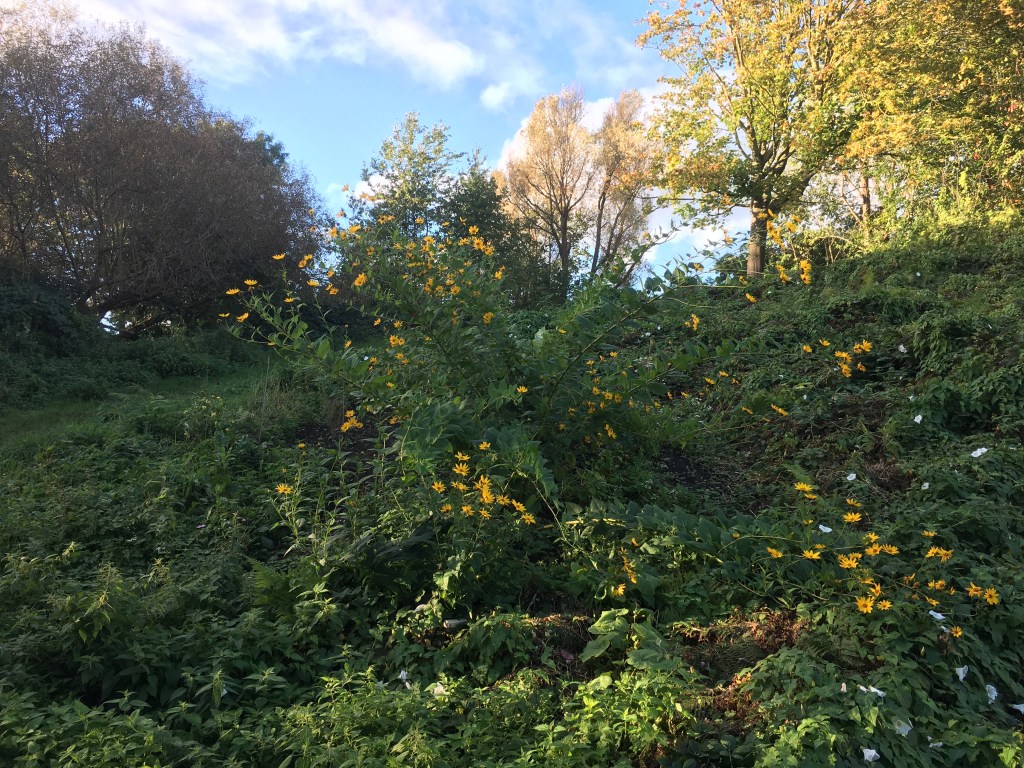
Not long after digging up the first few clusters of tubers, some passers-by had stopped to see what the fuss was about, curious to see what had us all giddy. After a nice chit chat, explaining the garden’s story, we offered them some artichokes and they headed off.
Such interactions have been a cornerstone of this project and on each visit, we are guaranteed to have a handful of curious and joyous interactions with those that pass through. Be it a smile, a shout of ‘thank you’ or people stopping for a longer chat, this guerrilla plot has taught me a lot about the community power of gardening.
Inspiration for cultivating some common land had come from the Incredible Edible movement, started by a group of women in Todmorden, they planted areas of council land without permission, in an attempt to revitalise their community. Their aim was to create change from the grass roots and had a beautiful catch line of “if you eat, you’re in”. Since beginning in 2008, what started as a local project has spread like a wild fire of love and there are now a network of over a thousand communities worldwide following similar principles!

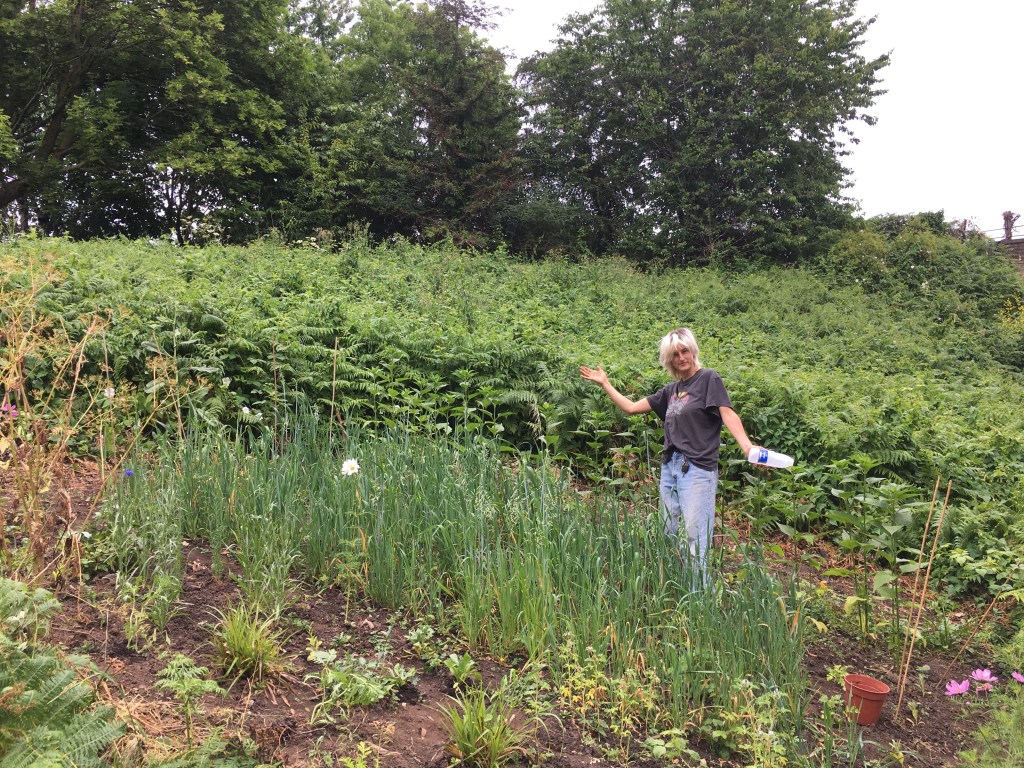
Back in Bristol, on a cold winter’s morning, the first patch of bracken and brambles was cleared for cultivation and a small handful of oats were sown into a slither of soil. The thin slither was followed by four slightly longer rows and with each visit a bit more land was cleared to make way for the garden. It was a tough task to take on two of the most stubborn plants in the rule-book and as one man un-inspiringly reassured me of “This is nice idea, but you will never defeat the brambles”.
A couple of months in, his remarks were feeling all too accurate, with the brambles and bracken encroaching with more vigour that I could handle. Fortunately, before all hope was lost, I was joined by friend and fellow gardener Yogi. The equation became 1 +1 = 3 and we were able to once again expand the area. Two became three when Imi joined and with them came our first bits of veg, of which the kale and ruby chard prospered throughout the drought of early summer. Issy was the next to get involved with the now named ‘oat spot’, and just in time as we had reached the point of harvest for our cereal crop. Over the last few months the black seed heads of the oats had matured and it was time to harvest and cure the crop, which Issy kindly made home for in her bedroom!

A month or so later, we were all gathered at Issys for a rather special step in the process, it was time to thresh and winnow our oats.
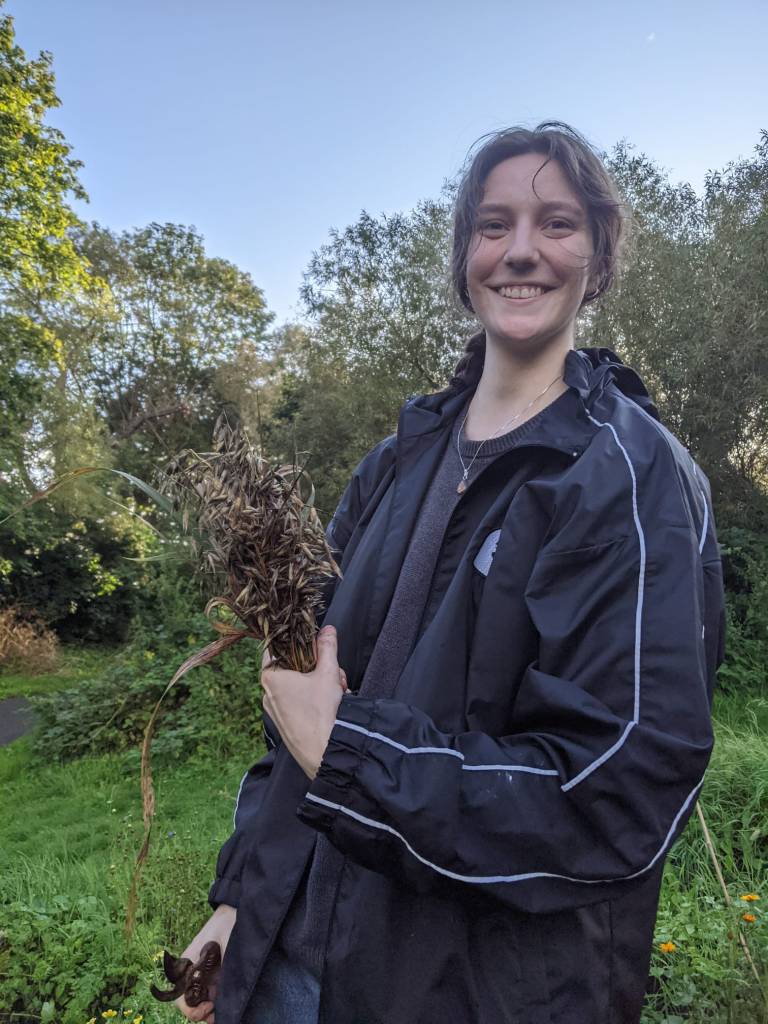
First up was the threshing, a rewardingly tactile stage that involves separating the oat grain from its husk (together they make the kernel), leaving us a large bucket full of black grains and golden wispy chaff (husk residue).
The next step was winnowing, usually done with the assistance of the wind, whereby the mix of seed and chaff are dropped from a height; the heavier grain should fall to the ground and the chaff is blown away in the wind. Given our location was the closed off back garden of a terraced house, we had to get creative! Frantic flapping of magazines proved just about adequate to be considered a winnow(?) and finally we were left with our black oats. It was a lovely moment and resulted in a quantity of seeds that had increased tenfold since being planted back in winter.
The slowest of slow food movements
It’s the 1980’s and the poisons of all-you-can-eat consumerist capitalism is arriving on the shores of Italy. American franchises selling cheap fast food are popping up left right and centre. The foundations of a country’s food culture starts to crumble at an alarming pace.
Carlo Petrini, an outraged thirty seven year old, decides to take action. In 1989, Petrini founded the Slow Food movement, a rebellion against the industrialisation of food, which was beginning to disconnect people from what they eat and in doing so, degrading the vast benefits to individual and community that a healthy local food system fosters. The movement in its essence is referring to food sovereignty, much like the activists that have revived the black oats, it aims to build community, promote good food from good farmers and empower people to be co-producers of their food, not just consumers. The slow food movement is about process, not just product and our crumble has involved process in the bucket load.

Having harvested the oats, it was time to assemble the remaining ingredients for the crumble. Sourcing the apples was relatively easy, a short walk down the road to a neighbours garden offered a sufficient spot for scrumping some apples. A bit brown and bruised, and certainly not the first to get a meal from them, but I returned with a basket full.
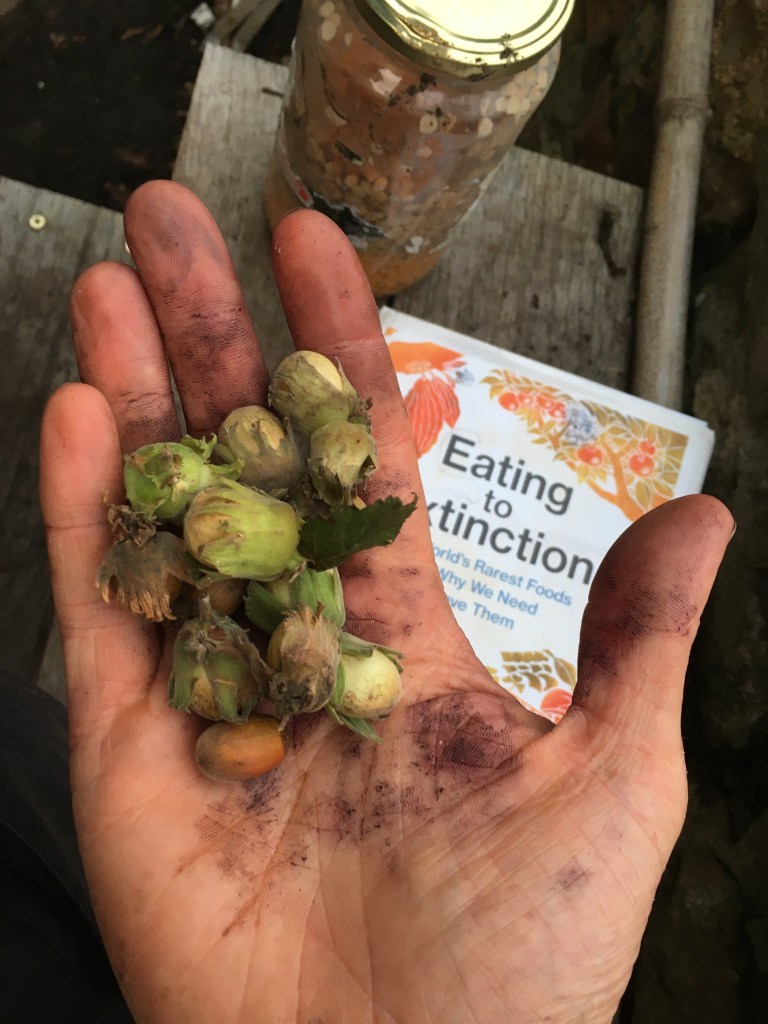
Less simple and certainly accounting for a large proportion of the <100 hours indicated for making this crumble, was the foraging of hazel nuts. I had spent many of my late summer walks out searching for cobnuts and despite my best efforts, I ended up with a rather feeble amount. Of this feeble amount an even feeble-er amount of shells contained viable nuts, with many hours of foraging converting into a small handful that was just enough for the crumble (fortunately I was mainly invested in the process…..) . As my Dad pointed out, I wouldn’t have survived long as a hunter-gather.
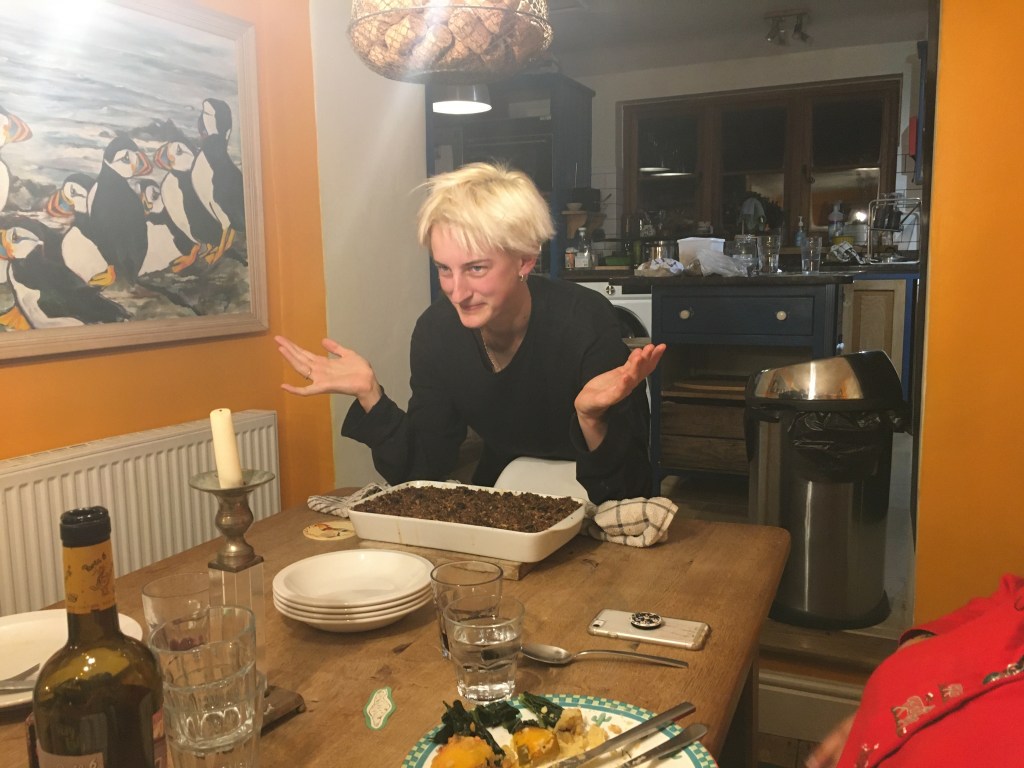
The time had come for our oat spot AGM and after a final stage of processing the oats (we rather barbarically blended them into a grey flour) we sat down to eat our symbolic crumble and celebrate another component of the slow food movement, eating together.
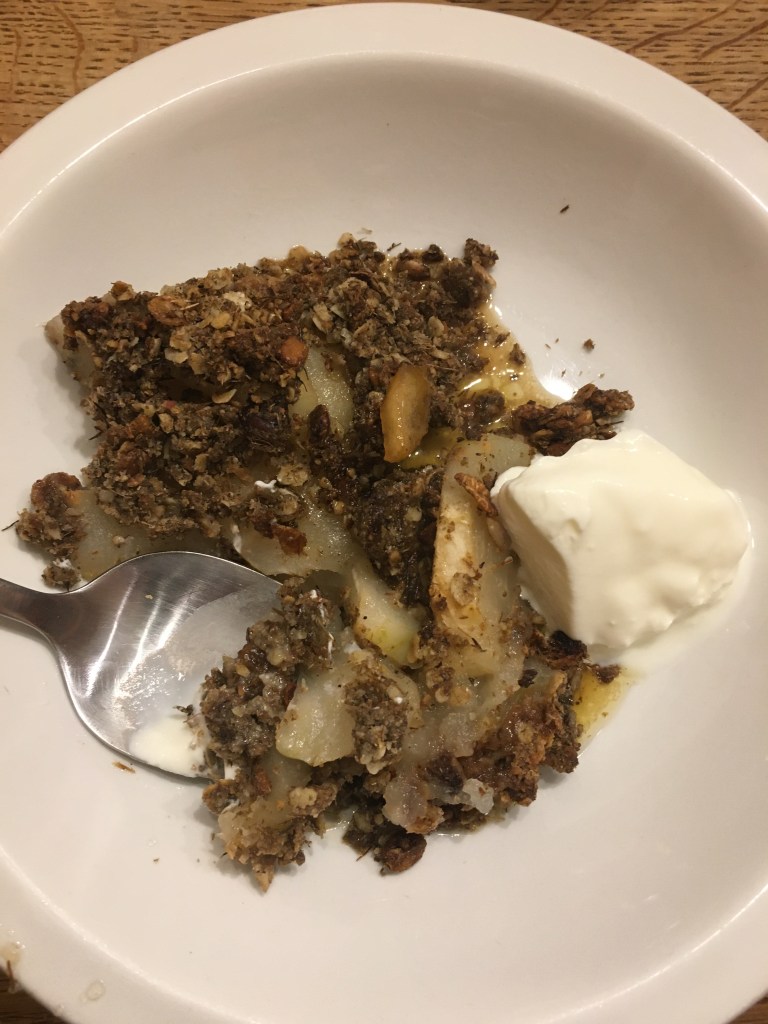
When we allow space for the process, the nutritional value of our food is no longer limited to what ends up on the plate. Unfortunately, for many, process is not something that the government and corporations are interested in cultivating.
A cost of living crisis (better named as a cost of capitalism crisis) means that a vast number of the population have neither the time, money or access to make positive food choices. Whether it is wages so low that families can’t afford fresh vegetables or a lack of government action against the ‘food’ industry which continues to manufacture ultra-processed poison, it’s clear that change is going to need to come from the community, not the fat cats and their caviar.
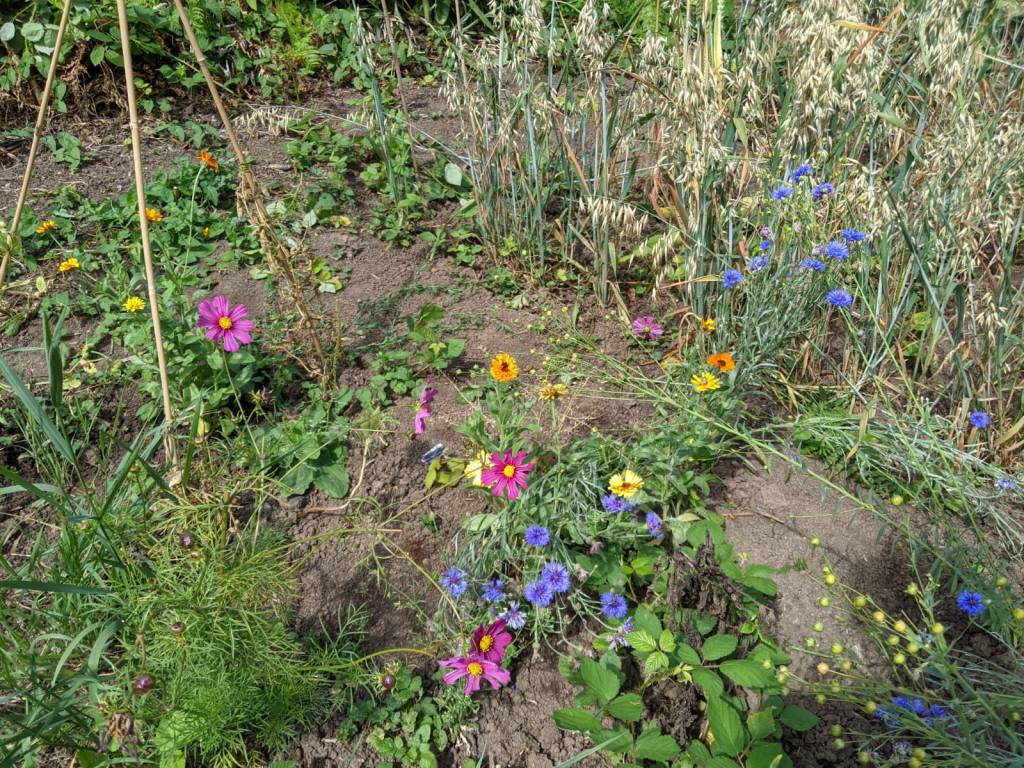
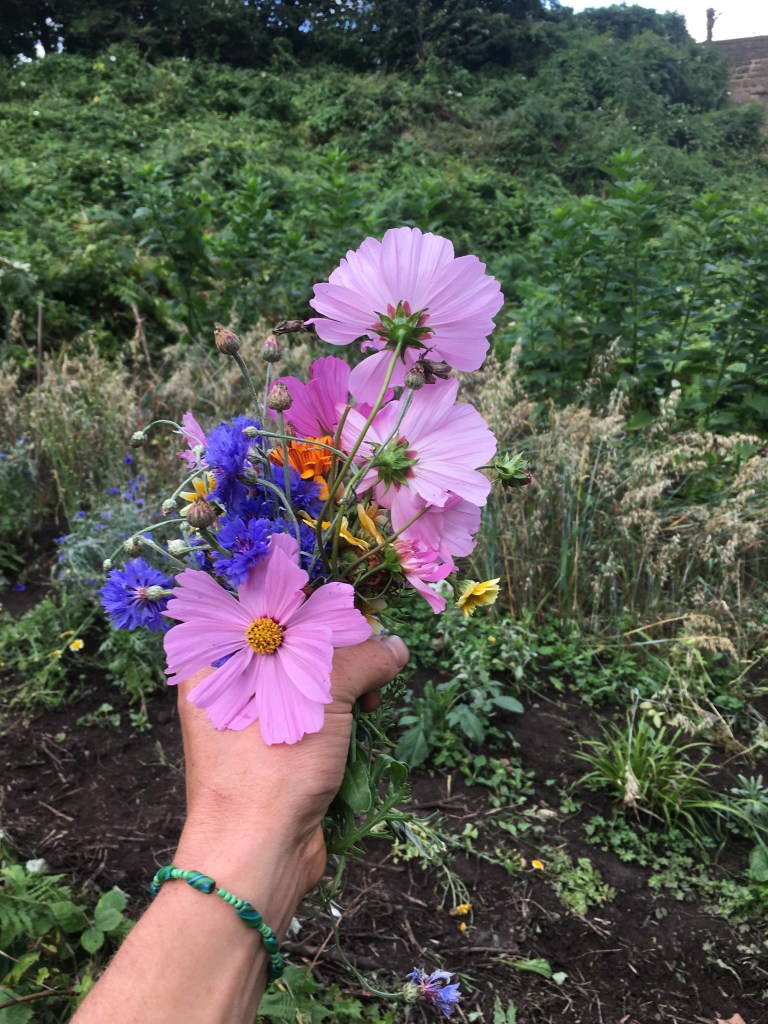
Every step of this crumble has provided nourishment of the soul, the flowers have brought smiles, the friends I’ve made have warmed the heart and the oats have fuelled rebellion. It is a dish that has given so much more than I could have ever imagined.


 Bricolage Gardening
Leave a comment