Vine
Full moon 29th September 2023
Deception – lost wisdom – dapple shade – changing colours
Let the edges encroach.
Sit back and watch as pavestone cracks make way for weeds, creeping rhizomes that piece together concrete carpets, a living cord that binds us all together.
Worship in the chlorophyll cathedral, where I’m unravelling beliefs.
Heart glows like leaves,
Autumn comes and they’ll be gathering beneath, our feet.
Soil symphonies, sing to me, lift this melancholic fog that clings to me,
seek the pain, I’ll have a splinter please.
Internal landscape parched like the midsummer pasture. Tides out, makes the estuary seem deeper. Thick clodden grooves like the neural pathways I’ve paced too often. Praying for rainfall to burst the banks, flood the meadows and let the wildflowers blossom.
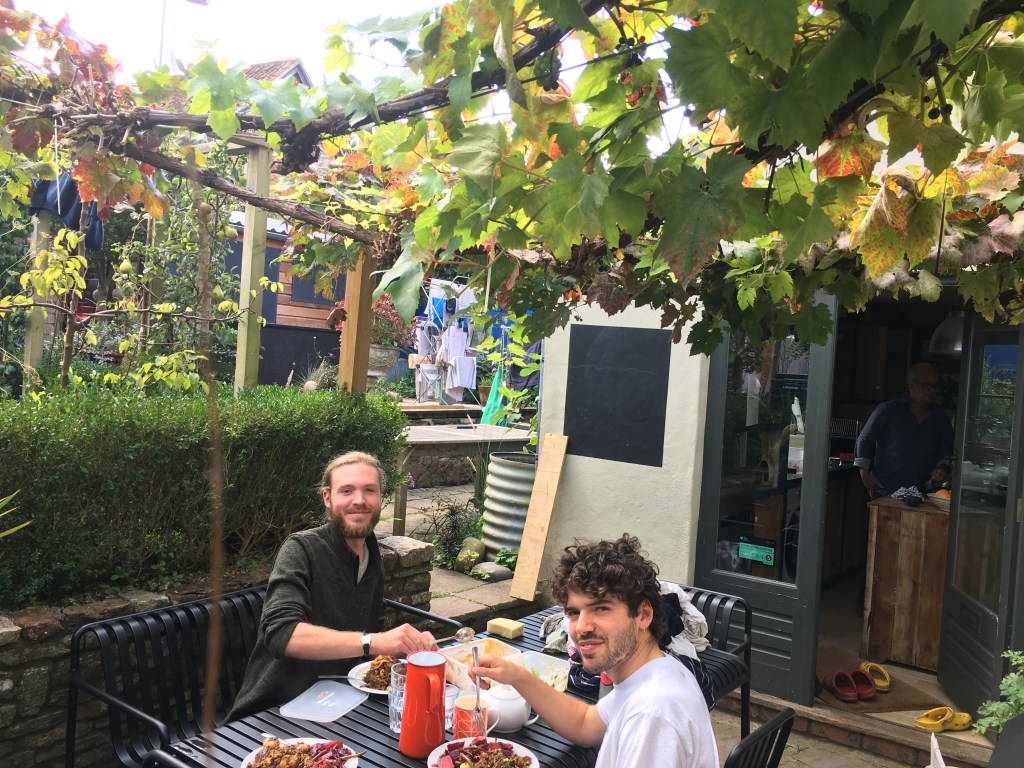
Having been drawn in to an extended period of seeking out hazel, my shift in focus to Muin is delayed, by which time the late summer sunshine has passed and now the grapes outside the kitchen hang sodden and dreary on their vines. An unusual constant in the ever changing design of my Dads garden, this backdoor vineyard has stayed put, providing dapple shade in the summer, grapes in September and at one point, a year-round perch for our family chicken.
When I play with the translation of Muin, vine, I think of foreign lands. vineyards rolling over scorched European mountains, glasses of wine in cobbled street restaurants. This imagery certainly didn’t match up with how I picture the British Isle and so was leaving me rather confused as to how the vine had made its way into the Ogham, a Celtic alphabet based around native trees and plants. Needless to say, a small amount of digging surfaced the misconceptions around this letter of the alphabet, with scholars 1suggesting that it most likely referred to our more native ‘vine’, the blackberry. Feeling a little embarrassed, and somewhat hoodwinked, I also saw charm in the irony of the situation. The elusive nature of the grape vine and its alcoholic alchemy had somehow tricked me into its arms. Although my misinterpretation certainly reflected some naivety, as I had spent little time researching the tree calendar, instead pulling on my boots and heading out for the hazel, it did shine light on the mysteries and unknowns that surround Celtic tradition. My own difficulties seem to be a shared hitch amongst those that specialise in such studies, a symptom of a lost lineage, no surprise after centuries of the cultural cleansing that occurred. Fortunately, storytelling, folklore and mythology have kept whispers of wisdom alive, a small flame kept alight via oral tradition.
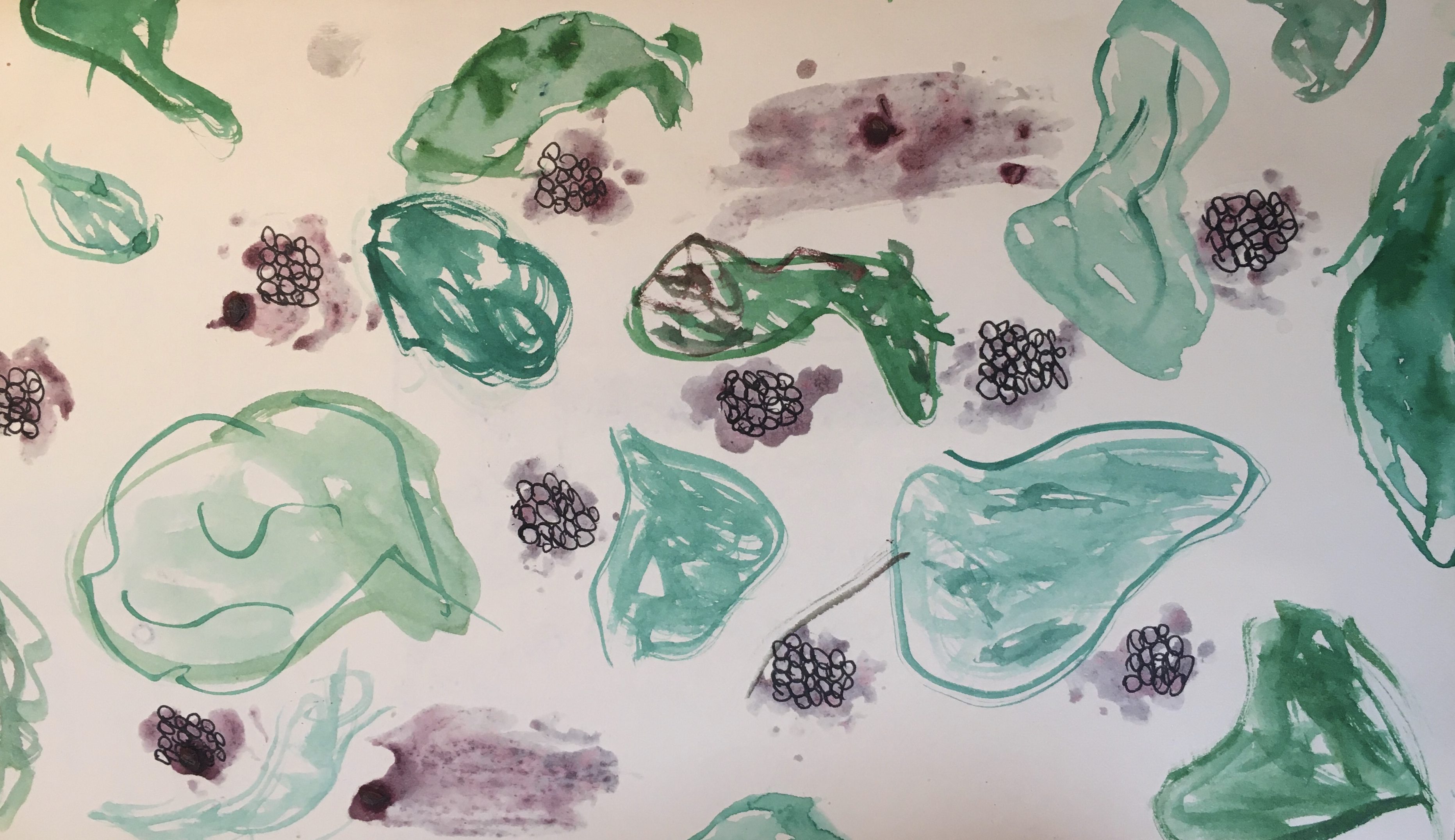
Despite the deceit, in some ways, the bramble had played a leading role in the beginning of my journey for connecting with the land. My cobnut searches were always paired with blackberry forages, slowly I’d browse the corridors of hedgerows, returning home with many more tubs of the latter. This year I was able to make some jam, a cupboard treat for months to come and a nice gift to share the summer’s bounty. A gateway plant for myself and I am sure most others, these hedgerow fruits are my earliest foraging memory, a sweet window within the year that brought a little joy to weekend walks.
Mythology is something that I have begun to take more interest in the last year or so, largely thanks to the beautiful storytelling of Blindboy2 who’s podcast offer a poetic exploration of topics more vast than one can create a spectrum for, ranging from the colonial history of fish fingers to the linear understanding of time in European art. Amongst other things, Blindboys’ theory on mythology as a means of keeping societies inline with ecological boundaries is an insight I’ve enjoyed playing around with, and one which recently brought my attention to blackberries.
Early in the evening, as I’m walking back from our village allotments, a flurry of sparrows take off from a thicket of blackberry bushes, interrupted from a late summer gorge on the turning fruit. Last year I had read an old folktale, that blackberries must not be eaten after Michaelmas (end of September), for it is said that on this day the devil was cast out of heaven, falling to Earth and landing on a thorny bed of brambles. Outraged, the devil cursed the brambles, spitting over them and creating the superstition of not eating blackberries beyond this point in the year. At the time I remember feeling very frustrated, I read it as a bunch of codswallop that was part and parcel of the various strands of religious dogma that once (and still) plagued us. Now, a year later, I was able to view this old tale in a rather new light, no longer did the devil represent something so triggering, perhaps this story was what Blindboy refers to, a piece of mythology that keeps us in check with our ecology. For if we were to pick these brambles bare, how would the birds fare? And if the birds didn’t fare well, how might the pests do that oh so love our allotments?
Mythology becomes a way to invoke wisdom in a poetic and locally adapted way that keeps a subtle awareness in the collective psyche. Much worse than picking blackberries into October, we have manicured the land and ourselves down to its bones. Hedgerows get the short-back-and-sides each year, pasture is grazed to an inch of its life, forests are clear cut, rivers poisoned, oceans plundered, skies clogged. Still the edges encroach. All this catastrophe has brought me towards stories. After several years of studying environmental science, days spent deep in the data of just how fucked we are, completely perplexed as to why more wasn’t being done, it became clear that it wasn’t science we needed most, but narrative. So now that’s what I look for, stories that can help us to see the world in a brighter light, bring us back within ecological boundaries, into harmony with what’s around and within us. Exploration not exploitation.
On the night of the full moon, the bright white eye is hidden, thick grey clouds lay stubborn, offering the occasional gap for a momentary wink. The following evening, it is a different picture, walking from Pensford to Stanton Drew, the moon shines bright behind me, casting my shadow as I walk. I’m amazed by its power, no need for a torch, guided by the moon, perhaps there is something significant there, as I follow my own lunar path.
The flood came and awareness was the raft, bound together with equanimity. The forbidden fruit hung low, trying my best to choose wisdom not knowledge. The days past, finches and time turned swathes of purple parachutes into waste-high clouds, glistening like snow-capped mountains in mornings dew, then drifting off in the afternoon sun.
Still the chest aches, like lead cakes, the thin veil between self and other swapped out for thick curtains. Left feeling disconnected, senses shut down so numbness the new norm, chase the dragon in search of more but end up heavy like wool jumpers in a swimming pool.
But healing is on the horizon, just above the estuary’s brow. Where I already lye, where the crickets and frogs are bounding, no thickets of fog surrounding. Draw the certain with nature’s mossy hand. A gloop of cooperation is what you’ll find, no it’s, others and I’s. Cosmic teathers dance in the wind. Drift along
 Bricolage Gardening
Leave a comment